Arborist and Tree Removal in Titirangi
Tree removal in Titirangi for steep bush sections, from sectional takedowns over roofs to pruning beside kauri and grinding out stumps that only a walk-behind grinder can reach. Arborist West Auckland Tree Removals provides that arborist work across Titirangi, Woodlands Park, Kaurilands and Konini, plus storm callouts on Scenic Drive and Huia Road. Our arborists are qualified, insured and members of the New Zealand Arboricultural Association, with more than 20 years of tree work in the west.
Titirangi sits inside the Waitākere Ranges Heritage Area, and more than 100 notable tree entries fall within its census areas, kauri the most common. Some trees here can be pruned or felled with no paperwork, while others need resource consent first. We check the council overlays for your address before quoting. Call 09 887 7492 or use the form, and an arborist will come out, walk the section and give you a written price.

Tree Services for Titirangi Bush Sections
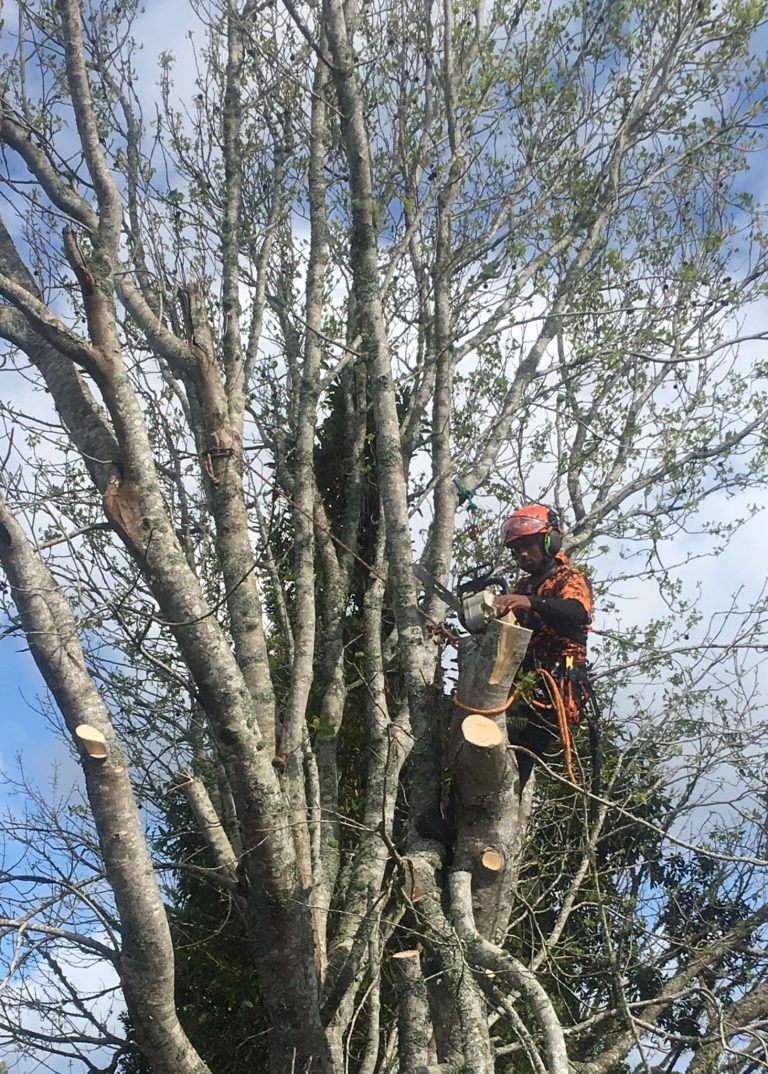
Tree Removal on Steep Titirangi Sections
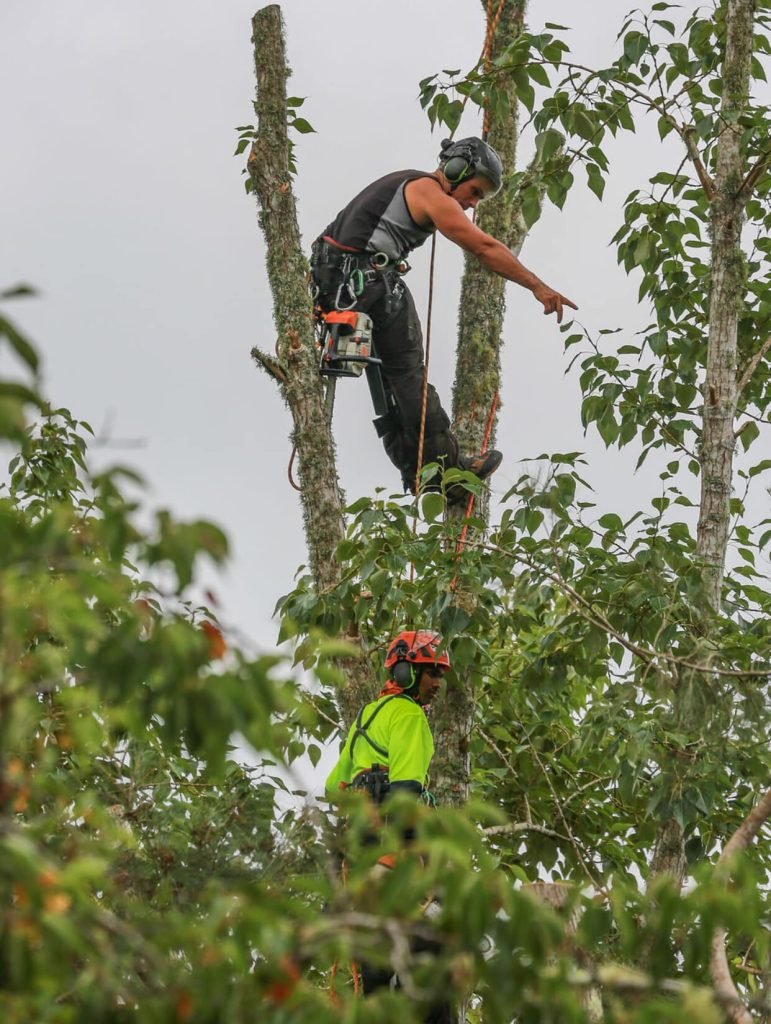
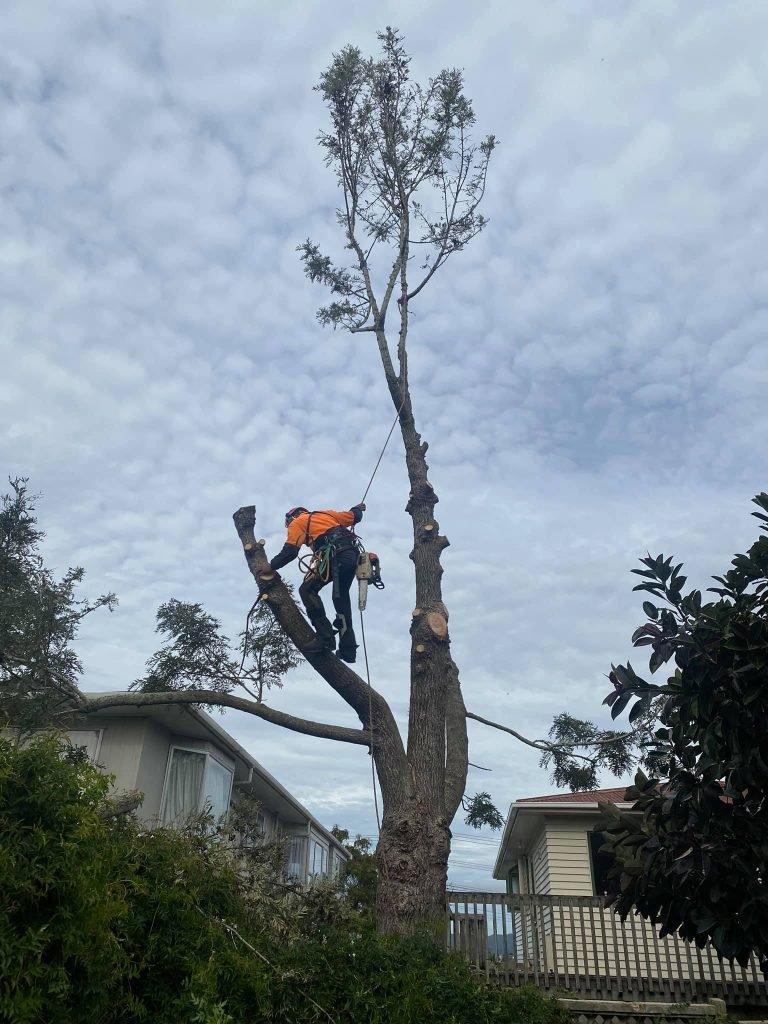
Felling a tall tree on a Titirangi slope is the job we are called for most, and it rarely comes down in one piece. Pines, gums and macrocarpa above a house are climbed, rigged and lowered in sections, so nothing drops onto the roof or the drive below.
Slope decides the method. A tree on the low side of a section can sometimes be felled whole, while one above the house almost never can. Tell us where the driveway sits and how far the truck can get.
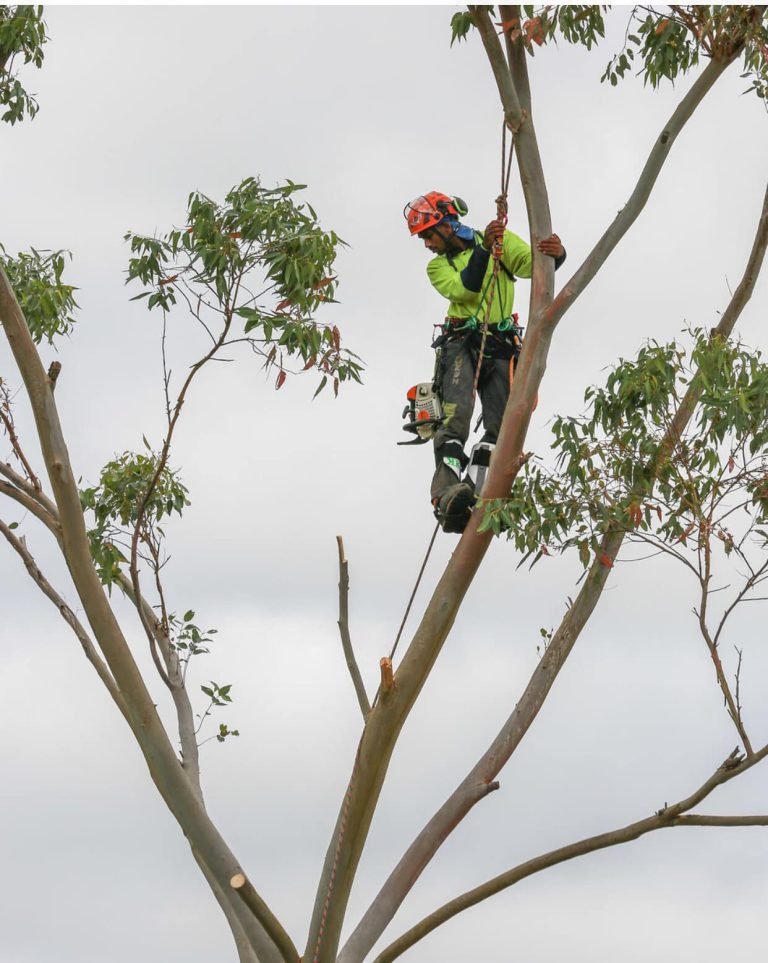
Pruning and Removal Near Kauri
Our crews work around kauri on most Titirangi jobs, because the trees grow through gardens as well as the bush. Kauri dieback travels in soil, so boots, ropes and gear are cleaned before and after work inside a kauri hygiene zone, which runs to three times the radius of the dripline.
A kauri can be pruned for deadwood or roof clearance. Removing a notable kauri needs resource consent, and whether yours is listed gets checked first.
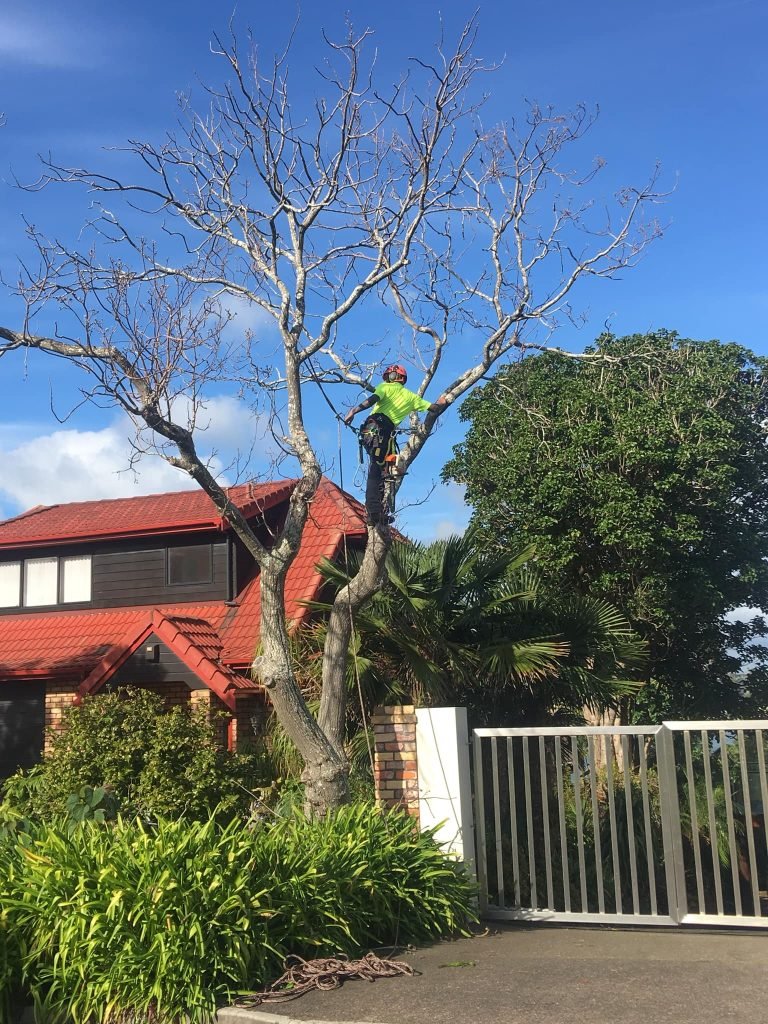
Pruning for Light, Views and Roof Clearance
Many Titirangi homes sit under a closed canopy, and the pruning we do here is mostly about letting light in and keeping branches off roofs and gutters. Crown thinning, crown lifting and view pruning are done from ropes, with each cut made back to a growth point.
A scheduled notable tree can lose no more than 10 per cent of its live growth in a calendar year without consent. Gutters full of leaves are worth mentioning, as they show which trees overhang most.
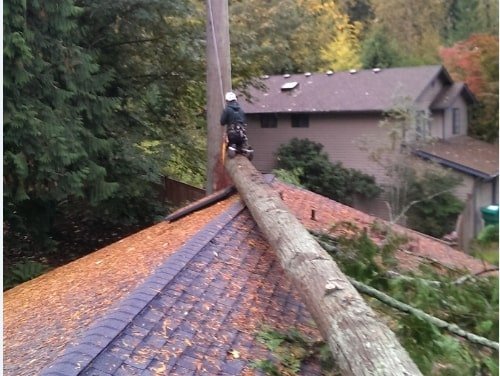
Storm Damage and Emergency Tree Work
Storms bring trees down across Titirangi roofs, driveways and roads, and our emergency line runs 24/7 for those calls. On steep streets a failed tree usually falls downhill, toward the next house or the road.
A tree that is on a house, has just split or may cause injury can be removed without getting resource consent first. If it was protected, the council wants written arborist advice and photos within seven days, which we can prepare.
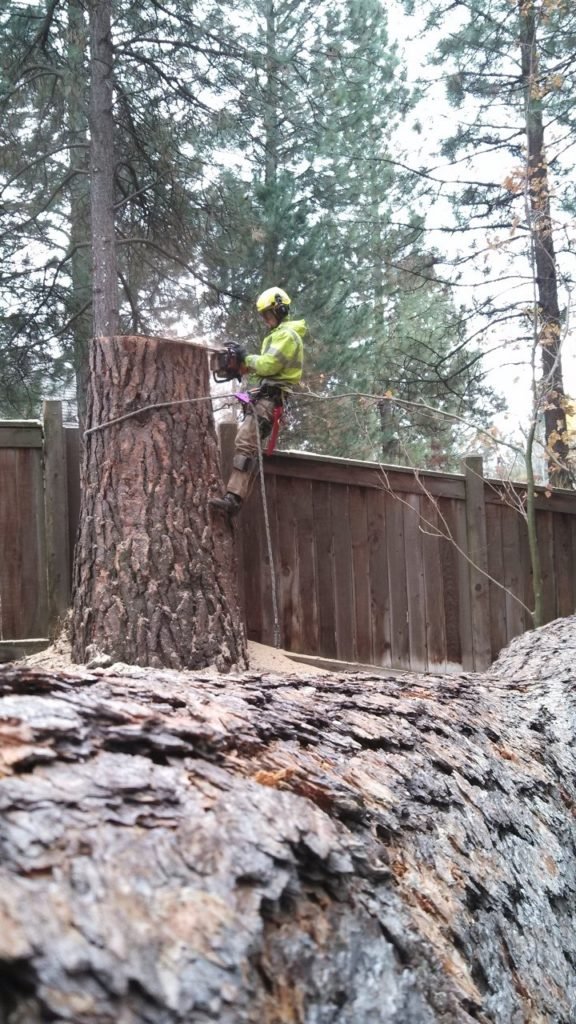
Stump Grinding on Bush Sections
Stumps on Titirangi sections are often reached only by steps or a bush track, so the grinder we bring depends on access. A narrow walk-behind machine fits through a garden gate and down a path where a tracked grinder will not.
Grinding near kauri disturbs soil, so it is planned around the hygiene zone. Tell us how many steps sit between the road and the stump, and whether the ground is wet or firm.
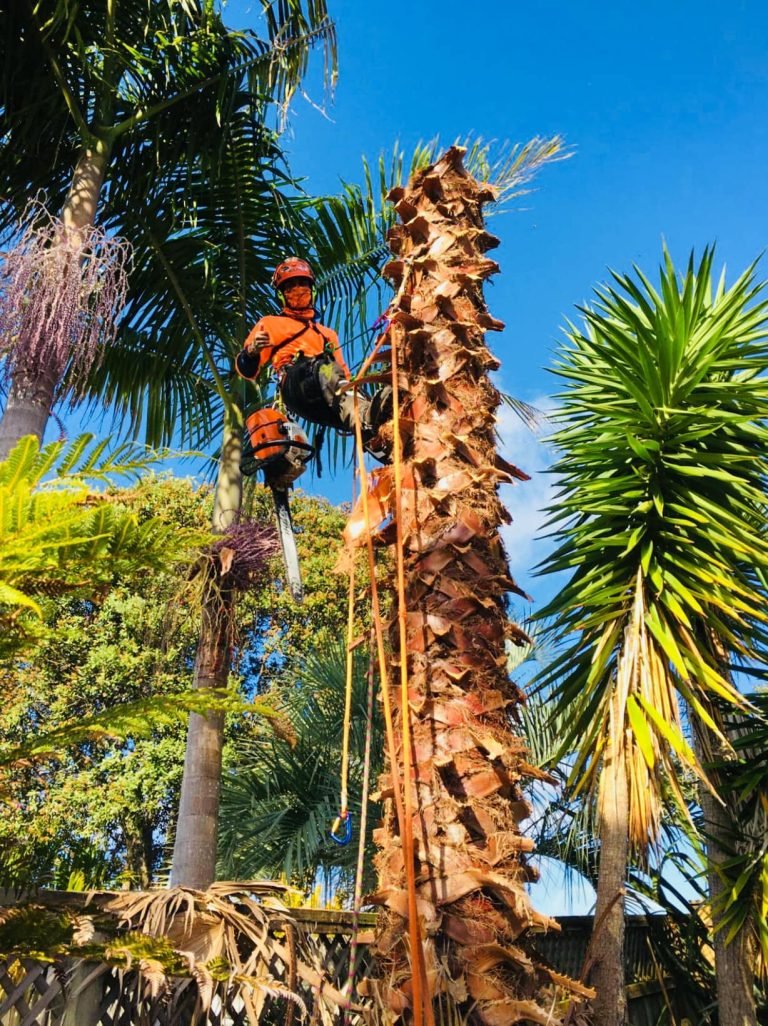
Weed Trees and Pest Palms
Self-sown pines, gums and old Phoenix palms are removals we carry out on Titirangi sections where garden meets bush. Phoenix palms are a pest plant in Auckland's Regional Pest Management Plan, so they cannot be replanted or given away.
Taking weed trees out opens space for natives to come back. Chipped material from non-pest trees can stay as mulch on banks, which helps hold soil on steep ground.
How a Titirangi Tree Job Runs
Section walk and overlay check
An arborist walks the section with you and checks the notable tree, ecological area and kauri layers for your address.
You know what needs consent before anything is priced.
Access and method plan
We work out how gear reaches the tree, whether it is climbed, rigged or felled, and where the chipper parks.
No surprises on a steep or narrow site.
Written quote
The quote lists each tree, the method, the stump work and whether wood stays or goes.
A price you can compare line by line.
Kauri hygiene and the work
Boots and gear are cleaned on arrival when kauri are near, then the crew climbs, cuts and lowers.
Soil and pathogens stay where they are.
Chipping and clean-up
Branches are chipped at the road, mulch goes on banks if you want it, and paths are blown clean.
The section is tidy before the crew leaves.
Get a Free Titirangi Tree Quote
Every job starts with a free site visit and a written quote from a qualified arborist. Call 09 887 7492 or send us a few details and we will be in touch.
Google Reviews from West Auckland Customers
★★★★★
“From the first consultation to the final clean-up, the team was professional, knowledgeable, and efficient. They safely removed a large tree close to my house without any issues and made sure everything was tidy before leaving.”
Charmi Lal, Google review
★★★★★
“They have removed in difficult tree ovar my house done it safely no damage good works.”
Thushara, Google review


Why Titirangi Homeowners Choose Our Arborists
Climbers for Steep Ground
Our climbers rig and lower trees on slopes where a crane or bucket truck cannot reach.
Kauri Hygiene Every Time
Boots, ropes and gear are cleaned before and after work near kauri.
Overlay Check Before Quoting
Notable tree and ecological area status is checked for your address first.
Insured Next to Homes
Public liability insurance and Site Safe crews on every Titirangi job.
Walk-In Stump Grinding
Narrow grinders reach stumps down steps and along bush paths.
Henderson Base
Our yard on Lincoln Road is a short drive from Titirangi Road.
Titirangi's Bush, Kauri and Tree Rules
Titirangi sits on the eastern edge of the Waitākere Ranges, inside the Waitākere Ranges Heritage Area set up by an Act of Parliament in 2008. Most residential land in its census areas is zoned Residential - Large Lot, a zone that keeps sections big and leaves room for tall trees around the houses. Homes on Atkinson Road, Konini Road and Wood Bay Road sit among mature trees, so sectional removal is the normal method here.
Protection is the next thing to check. More than 100 notable tree entries fall inside the Titirangi census areas, and kauri is the most common single species on the list, followed by rimu. A notable tree can lose no more than 10 per cent of its live growth in a calendar year without consent, and removing a protected tree needs resource consent. Ten Significant Ecological Area overlays also reach into the suburb. Auckland Council guidance on protected trees sets out the other triggers, such as a tree near the coast or a stream or a covenant on the title, and each one is checked for your address.
Kauri dieback is the other local issue. Auckland Council's kauri dieback survey layer records 75 points with dieback infection inside the Titirangi census areas, all on public land, from surveys run between 2007 and 2017. The pathogen moves in soil, so the National Pest Management Plan for kauri treats the ground within three times a kauri's dripline radius as a hygiene zone. Earthworks inside one have needed a risk management plan since August 2023, and stump grinding disturbs that same soil.
If you are unsure which of these rules touch a tree near your home, our arborist team in West Auckland can walk the section and explain the options before you commit to anything. Photos of the tree and its surroundings, sent ahead, help us bring the right gear on the first visit.
Tree Removal Prices in Titirangi
| Job | Guide price (excl. GST) | What it covers |
|---|---|---|
| Small tree under 5 m, easy access | $400 to $900 | Felling, chipping, clean-up |
| Medium tree, 5 to 12 m | $900 to $2,500 | Climbing, sectional removal, chipping |
| Large tree over 12 m or above a house | $2,500 to $6,500 | Rigging, staged lowering, chipping |
| Pruning a medium tree | $500 to $1,200 | Climbing crew, chipping, clean-up |
| Stump grinding, per stump | $150 to $900 | Set by stump size and access |
Guide prices in NZD, excluding GST. Steep or walk-in sections in Titirangi often sit toward the upper end, because rigging and carrying take longer. Every price is confirmed in writing after the site visit.
What Moves the Price of Tree Work in Titirangi
- Slope. A tree above the house needs rigging and staged lowering.
- Access. Steps and bush tracks mean hand-carrying to a chipper at the road.
- Kauri nearby. Hygiene steps and careful soil handling add time.
- Protected status. Consent, where needed, adds lead time and cost.
- Power lines along the road frontage.
- Wood and waste. Leaving rounds and mulch on site costs less than carting them away.
Titirangi Homes and Sections in Numbers
14,853
people in Titirangi's five census areas at the 2023 Census
92.5%
of occupied dwellings are separate houses
100+
notable tree entries inside the suburb
75
recorded kauri dieback infection points on public land
Separate houses made up 92.5 per cent of Titirangi's occupied dwellings at the 2023 Census. Larger sections and trees spaced around the house mean most jobs here involve rigging over roofs and a longer carry to the chipper.
The population has barely moved. The Titirangi South census area lost 5.7 per cent of its residents between 2018 and 2023, and the others changed by a few per cent either way, so few sections are being cleared for new builds. Most work here is managing trees that have grown for decades beside existing homes, which means pruning, reductions and careful removals.
Road space matters on a removal, because the truck and chipper usually park on the street. Jobs near Titirangi School, Kaurilands School and Woodlands Park School can be timed to avoid drop-off and pick-up.
Titirangi Tree Removal FAQs
How much does tree removal cost in Titirangi?
Most removals cost $400 to $900 for a small tree with easy access, $900 to $2,500 for a medium tree and $2,500 to $6,500 for a large tree above a house, plus GST. Steep or walk-in sections usually sit toward the top of each range.
Do I need consent to remove a tree in Titirangi?
Can you prune or remove a kauri on my property?
What if a tree falls on my house in Titirangi?
Can you get equipment onto a steep section with no driveway?
Do you clean your gear for kauri dieback?
Which parts of Titirangi do you cover?
Book an Arborist in Titirangi
Arborist West Auckland Tree Removals
9 Lincoln Road, Henderson, Auckland 0610
Phone 09 887 7492
Serving Henderson, Massey, Te Atatū, Glen Eden, Titirangi, New Lynn, Kelston, Swanson and the rest of West Auckland